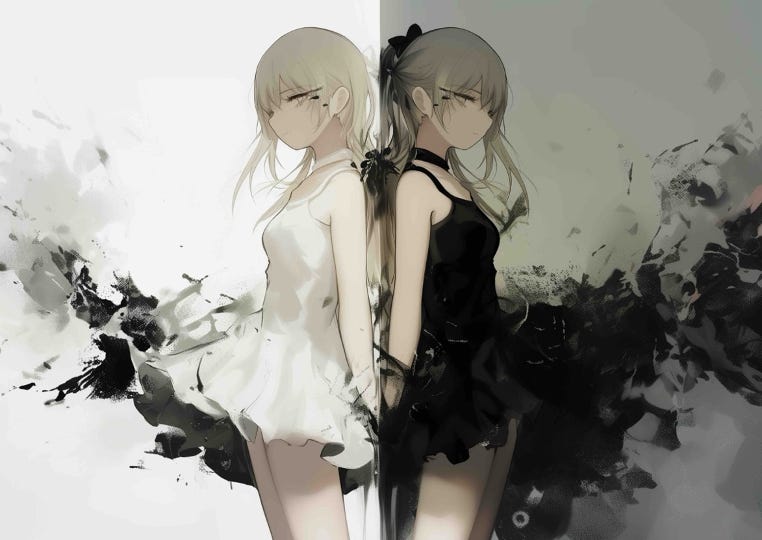
That morning I opened my eyes and for a moment had no idea where I was, and my head ached as if it belonged to someone else. When I finally managed to get up, I saw it was ten o’clock. I normally sleep badly and usually wake around five or six in the morning. Sleeping this dead-to-the-world late had never happened before.
I also discovered I reeked of alcohol, and the bathroom had signs of vomiting. For someone who doesn’t drink at all, this was inexplicable. So this was what a hangover felt like. On the floor I found three empty beer cans — their contents had apparently all gone into me.
I had absolutely no memory of doing any of that. Sleepwalking? I asked my dad, but he hadn’t seen anything. My mental health has always been shaky; odd things happening occasionally wasn’t surprising, so I didn’t think much of it.
Over the following days I kept waking up smelling of alcohol, though the headaches got less severe and the vomiting stopped. I suspected I was drinking again in my sleep and slowly adjusting to it. Then cigarette smell appeared too, and a pack and lighter showed up openly on my desk. I threw them away; new ones appeared the next day. Even my dad noticed this time, and gave me a serious talk about how smoking was a bad habit. I had no idea how to explain.
Then makeup started appearing in my room, along with sexy clothes completely opposite to my taste, and a girly pink handbag I’d never use. I normally go bare-faced in plain long dresses; now the wardrobe was full of brightly coloured strappy tops, off-shoulder, open-back, crop tops, and short skirts. I began to seriously suspect another person had moved into my room. No — into my body. I didn’t dare touch any of it; I kept it all sealed away in the wardrobe like something shameful.
I didn’t know how to deal with it, so I pretended nothing was happening and hoped it would correct itself. But the nocturnal activities were affecting my sleep, leaving me exhausted during the day — I ended up sleeping through the daytime and going out involuntarily at night. When I found a box of condoms in the handbag, I knew this was serious.
To stop whatever was happening, I decided to stay awake through the night. I sat at my desk with a book, but it was too draining, so I switched to music, which made me drowsy anyway. I held out until the early hours, then slumped over the desk and fell asleep. Before I went under, I wrote a line on an open notebook: Who are you? What do you want? The next morning I woke up in my bed, wearing only lace-trimmed underwear. I scrambled up and saw someone had written back in an unfamiliar hand:
“I’m Faan. I don’t want anything specific. I just want to do the opposite of whatever you do.”
So I started communicating with Faan through notes. It reminded me of A-loi, who has dissociative identity disorder — he uses the same method to talk to his other self, A-sau. But why would I randomly develop multiple personalities? It’s not contagious, is it?
At first I just complained at Faan constantly, accused her of using my body, tried to drive her away — none of it worked. I was worried that if I pushed too hard she’d do something irreversible, so I tried a gentler approach, hoping she’d at least consider my feelings. Have your fun, but keep some limits. After all, she pointed out, the body isn’t just mine — it’s ours.
Beyond notes, I found we could communicate through voice recordings and video. I tried recording messages for Faan on my phone, but quickly regretted it. The video she sent back was so far beyond what I could handle — footage of her on dates with men — that I deleted it all without watching past the opening. That face that was clearly mine, but also a complete stranger. Besides fear, I was furious. I wrote: “Faan, if you keep this up, I’ll end this body.” She wasn’t remotely threatened. She wrote back: “You want to end it? Let me do it.” I nearly fainted reading that.
Faan opened a social media account and broadcast her nightlife everywhere. I was mortified — what if people who knew me saw and thought I’d become reckless? Luckily our social circles didn’t overlap; or rather, I didn’t have a social circle at all — so her existence was actually more real in the world than mine. To everyone out there, she was Lai Sun-fei. I was the imposter. I could feel myself being gradually replaced.
Sometimes Faan would read my books and leave comments in the margins. When I discovered she wasn’t opposed to reading — even seemed to enjoy literature — I felt something like relief, like we’d finally found common ground. Her literary opinions were unusual though: she seemed to find every male character in every novel to be some kind of bastard. I asked, curiously: “So what about going to find those men every night?” She wrote back: “I’m punishing them.” I thought Faan was contradicting herself.
She even started editing and continuing things I was writing. So this story you’re reading right now — did I write it? Or did Faan? Am I writing Faan, or is Faan writing me? I can’t tell anymore.
One day I woke up near noon, aching all over, with blood on my hands and dress. I checked myself carefully and found no injuries. I looked at my phone and found only a record of Faan calling an unknown number the previous night. I hesitated for a long time, too afraid to call it back. I spent the whole day on edge, waiting for a knock from the police.
I asked A-loi for help — could he stand guard outside my building that night, wait for Faan to appear, and stop her doing anything criminal? He agreed immediately. We’ve never really defined what we are to each other, A-loi and me. Since he came out we’ve met occasionally, without much to say. Maybe we both feel that with our mental health situations, getting closer wouldn’t be wise.
The next morning I woke up in A-loi’s bed. A-loi looked shaken, saying he didn’t know what had happened — his personality had shifted to A-sau. I got up and saw a black strappy dress on the floor. I went into the bathroom and saw a face in the mirror still wearing heavy makeup. Like an electric shock — I realised this was the first time I’d come face to face with Faan. She wore an expression of slight surprise too, her lips moving as if about to say something. I pressed my hand over her mouth before she could, turned back to A-loi’s room, climbed onto the bed, and said: “Come on — it’s time to turn the tables.”
SF’s Strange Ordinary was originally published in Chinese in ebook format in 2025. Following it’s serialization in English translation, an English ebook version will be published. If you want to buy the Chinese version (USD 7.99), please click the link below:
Translated from the Chinese original with Claude
Picture generated with Midjourney


